



Favorites
Hamza Yusuf’s recommended books, documentaries and other relevant media

Return of the God Hypothesis
Beginning in the late 19th century, many intellectuals began to insist that scientific knowledge conflicts with traditional theistic belief—that science and belief in God are “at war.” Philosopher of science Stephen Meyer challenges this view by examining three scientific discoveries with decidedly theistic implications. Building on the case for the intelligent design of life that he developed in Signature in the Cell and Darwin’s Doubt, Meyer demonstrates how discoveries in cosmology and physics coupled with those in biology help to establish the identity of the designing intelligence behind life and the universe. (Online Description)

Devils
Inspired by the true story of a political murder that horrified Russia in 1869, Fyodor Dostoevsky conceived of Demons as a “novel-pamphlet” in which he would say everything about the plague of materialist ideology that he saw infecting his native land. What he emerged with in 1872 was at once his darkest novel until The Brothers Karamazov and his most ferociously funny. For alongside its relentlessly escalating plot of conspiracy and assassination, Demons or Devilsis a blistering comedy of ideas run amok. And, like all of Dostoevsky’s novels, it is also a riot of literary voices. (Online Description)

The Platonic Tradition
This engaging text begins by providing a detailed and accurate overview of Plato's philosophy and its central idea - the idea of a transcendent reality that has popularly become known as the theory of the Forms. Professor Kreeft then takes us on a concise journey through Western Philosophical history to show how that central idea - the theory of forms - has either been built upon or reacted to by philosophers ever since. We explore not only the work of Plato, but also that of several other great voices in the Western Philosophical tradition - Aristotle, Plotinus, and Augustine - each of whom gave the forms a new metaphysical address. (Online Description)

Crusade and Jihad
Crusade and Jihad is the first book to encompass, in one volume, the entire history of the catastrophic encounter between the Global North—China, Russia, Europe, Britain, and America—and Muslim societies from Central Asia to West Africa. William R. Polk draws on more than half a century of experience as a historian, policy planner, diplomat, peace negotiator, and businessman to explain the deep hostilities between the Muslim world and the Global North and show how they grew over the centuries. (Online Description)

Weighing the Word
A comprehensive survey of traditional and contemporary views on the Qur'an, including textual, historical, sociological, philosophical, aesthetic, linguistic and experiential, brought together in an effort to ascertain whether Islam's sacred book is the word of God, as it claims to be, or not. Readers will find here the earliest ancient sources and the latest scientific studies uniquely confronted to shed objective light on this important topic. (Online Description)
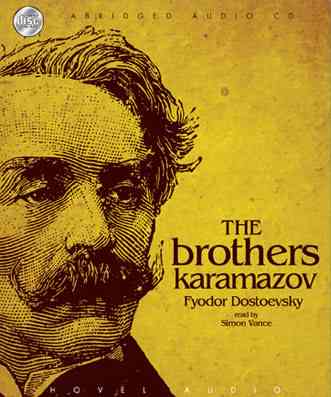
Brothers Karamazov
If you haven’t read this, it’s well worth the haul. Dostoevsky deals with every major theme of the current crisis in the West. The people are real, the dialogue eavesdrops on real conversations, and the culprits are as complex as the heroes are simple.
Sense and Sensibility
A beautiful study of two ways of being in the world. Marriane is the precursor to the modern, egocentric, fun-filled, tradition-scoffing “individual.” Elinor is the wonderful, dutiful, stoic, and giving caretaker of hearts. By the end of the novel, the two have discovered themselves and risen above the trials and torments of life on earth to enter into the bliss and joy of a Jane Austen ending.
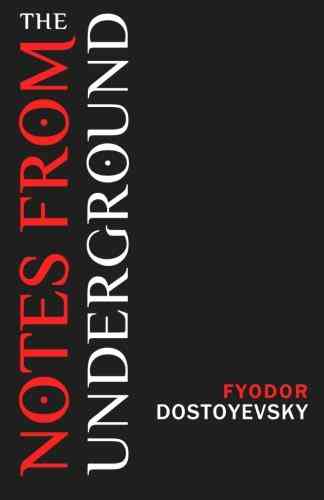
Notes from Underground
I would love to see this book rewritten with the title, “Posts from the Underground.” This is the most serious study ever done on the problem of modern man’s impotence in the light of an alienating society, vacuous and demeaning. The underground man fills our Internet with his anonymous posts filled with venom and resentment. He can do nothing, so he spends his life attacking those who can and do something with troll-like viciousness under the digital bridges humans have built to connect virtual lands. Nietzsche was convinced that Islam was free of what he termed, “ressentiment.” He felt Islam bred nobility and was inhabited by men of virtue. But the underground Muslim is alive and ill on the net, seething with his impotent rage, using pseudonyms and often foul language to attack all and sundry from his dark underground cavern of callowness.
Forks Over Knives
While I would not completely recommend a “vegan” diet, I think the modern diet is a danger to our health, and this wonderful documentary can be a life changer for those of you who aren’t aware of just how harmful our Western diets are. (I include most modern Muslim diets in this, given the over-consumption of meat and the increasing corporatization of our means of production.)
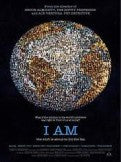
I Am
If you watch documentaries, this is the end-all. Tom Shadyac is a proof against all of us who cling to “stuff.” He discovered what’s wrong with the world (hint hint: in the title) and what we can do about it.